Persistent chest discomfort, low energy, and breathlessness often begin quietly. Daily routines feel harder, and small activities start causing discomfort. These signs are not always ignored, but they are often misunderstood. When blood flow to the heart is restricted, the body begins to show these signals in different ways. In such cases, medical care becomes essential. One of the most trusted procedures used to restore proper blood flow is the coronary artery bypass graft. For patients exploring artery bypass grafts or looking for CABG bypass surgery in Gurgaon, understanding the process, preparation, and recovery plays an important role in making informed decisions.
This guide explains the basics in simple language, helping readers understand what to expect and how proper care can improve heart health.
What is CABG Surgery?
CABG stands for Coronary Artery Bypass Grafting. It is a surgical method used when the heart does not receive enough blood and oxygen due to blocked or narrowed arteries.
In this procedure:
- A healthy blood vessel is taken from another part of the body
- It is connected to the blocked artery
- This creates a new path for blood to flow
This new vessel is called a graft. Depending on the condition, one or more grafts may be used. That is why it is often referred to as artery bypass grafts in medical terms.
The purpose of this surgery is simple:
- Improve blood flow to the heart
- Reduce chest pain
- Support better heart function
The surgery is done under general anaesthesia and usually takes a few hours depending on the number of blockages.
Coronary Artery Bypass Grafting Procedure
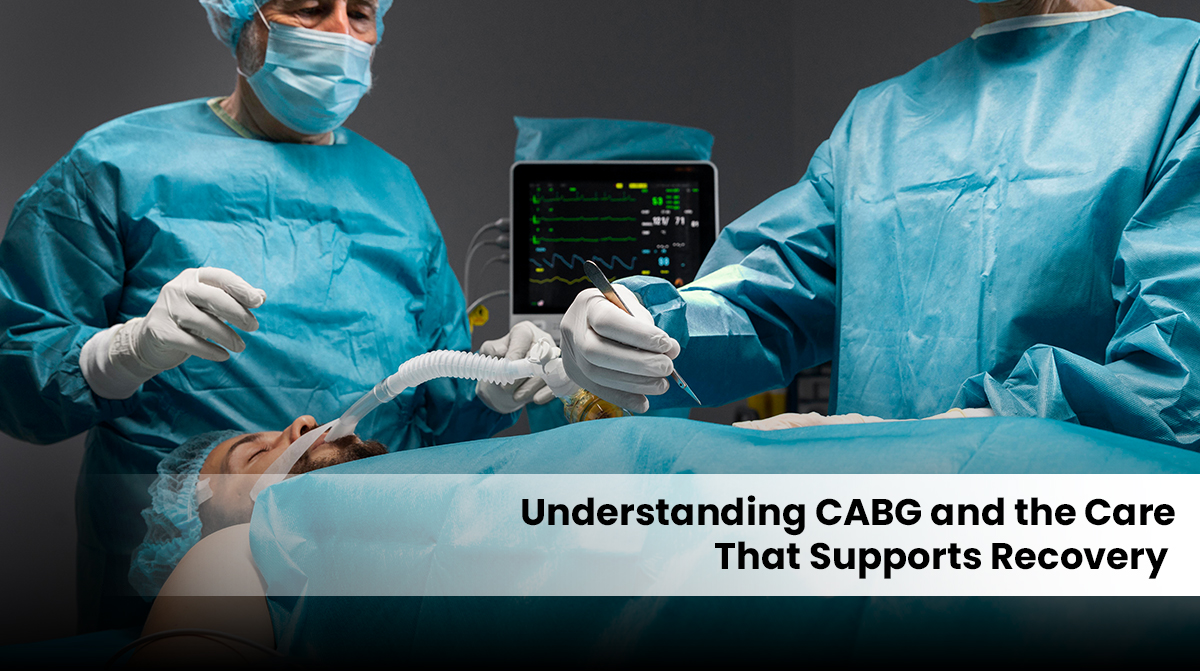
The CABG procedure is carried out by a trained cardiac surgery team. Each step is planned carefully to ensure safety and precision.
Step-by-step overview:
- A mild sedative is given before surgery to keep the patient relaxed
- An IV line is inserted for medications
- General anaesthesia is administered in the operation theatre
- A breathing tube is placed and connected to a ventilator
- A heart-lung machine takes over blood circulation during surgery
During the surgery:
- The chest is opened through an incision along the breastbone
- The heart is accessed carefully
- A healthy blood vessel is taken from the leg, arm, or chest
- The graft is attached below the blocked artery
- Blood flow is redirected through the new path
In some cases, more than one graft is used. This depends on how many arteries are blocked.
This entire process is what makes coronary artery bypass graft a reliable option for restoring heart function.
Common Symptoms of Coronary Artery Disease
Certain symptoms indicate that the heart may not be receiving enough blood. These signs should not be ignored.
Common symptoms include:
- Chest pain or pressure
- Constant tiredness
- Irregular heartbeat
- Shortness of breath
- Swelling in hands or feet
These symptoms may appear gradually or suddenly. When left untreated, they can affect daily life and overall health. CABG helps in improving these symptoms by restoring proper blood flow.
How to Prepare for CABG Surgery
Preparation plays a key role in recovery. A well-prepared body responds better to surgery and heals faster.
Important steps before surgery:
- Health checks
Identify any underlying conditions that may affect surgery - Blood sugar control
Especially important for diabetic patients - Personal hygiene
Helps reduce the risk of infection - Support system
Arrange help at home after surgery - Quit smoking
Supports better healing and reduces complications - Balanced diet
Strengthens the body before surgery - Stress management
Deep breathing and calming activities help reduce anxiety
Following these steps ensures a smoother surgical experience and recovery period.
Common Myths About CABG
Many misunderstandings exist around CABG. Clearing these myths helps in making better decisions.
Myth vs Reality
- Myth: All heart blockages need surgery
- Treatment depends on the patient’s condition and is decided by doctors
- Myth: Only older people need CABG
- Younger patients may also require surgery depending on their condition
- Myth: CABG is very risky
- It is considered one of the safer heart procedures when done by experts
- Myth: The surgery is very painful
- Pain is managed effectively with proper care and medication
- Myth: CABG cures heart disease completely
- It improves blood flow but lifestyle care is still important
- Myth: Normal life is not possible after surgery
- Most patients return to regular life after recovery
- Myth: No lifestyle changes are needed
- Healthy habits remain important even after surgery
Understanding these facts helps remove fear and builds confidence in treatment.
Dr. Udgeath Dhir: Experience That Builds Trust
Choosing the right surgeon plays a major role in successful outcomes. Dr. Udgeath Dhir brings years of experience in cardiac surgery with a strong focus on patient care.
Key highlights:
- Extensive experience in complex heart procedures
- Skilled in minimally invasive and robotic techniques
- Patient-focused treatment approach
- Advanced diagnostic support
- Continuous care before and after surgery
Each treatment plan is designed based on individual needs. Care does not stop after surgery. Follow-ups, recovery support, and guidance are part of the process.
Moving Forward with the Right Heart Care
Proper treatment, timely diagnosis, and expert care can make a meaningful difference in heart health. Procedures like coronary artery bypass graft offer a structured way to restore blood flow and improve quality of life. For those considering artery bypass grafts or exploring CABG bypass surgery in Gurgaon, guidance from an experienced specialist matters.
Dr. Udgeath Dhir combines skill, experience, and patient-focused care to support better outcomes. From diagnosis to recovery, every step is handled with attention and precision.
Take a step towards better heart health with the right care and guidance.
FAQs
- What does CABG surgery do?
CABG improves blood flow to the heart by creating a new path around blocked arteries using a healthy blood vessel from another part of the body.
- How long does the surgery take?
The duration depends on the number of blockages. It usually takes a few hours and is performed under general anaesthesia.
- Is recovery difficult after CABG?
Recovery becomes smoother with proper care, rest, and follow-up. Many patients return to daily routines gradually after healing.
- Can symptoms return after surgery?
Symptoms may return if lifestyle care is not maintained or if new blockages develop over time. Regular monitoring is important.
- Is CABG the only treatment option?
Treatment depends on the condition. Doctors decide whether surgery or other methods are suitable based on individual health.