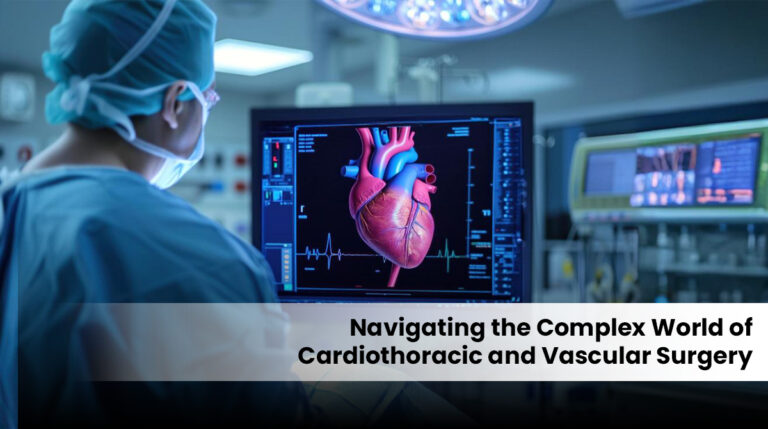
Modern medicine continues to provide life-saving technology, primarily cardiothoracic surgery. The methods involve complications of the chest, lungs, and heart, and the new procedures are allowing doctors to fix patients in less risky and quicker procedures. There have been some amazing developments in recent times that have turned around the means through which such procedures are undertaken. The Rise of Minimally Invasive Surgery: An important development in recent history has been the application of minimally invasive methods. Instead of necessitating cuts through the entire chest, doctors now use small tools and microscopes to reach into the heart and lungs through incisions so small they don't need to be stitched. It is less painful, causes less bleeding, and heals faster. People who once spent weeks in the hospital are now being discharged within days. Such innovative procedures also reduce stress and make surgery safer. Robotic-Assisted Procedures: Robotic technology has also been behind procedures performed on the chest and heart. The robots help doctors to be more accurate in performing surgery. Mechanized arms perform surgery while the surgeon directs, and this increases surgery's stability and accuracy. The doctor can stay seated in a control console and instruct the machine to conduct the delicate steps, which would be immensely hard to perform manually. This has diminished the risks associated with surgery and provided more certain outcomes. Advanced Imaging Technology: Procedures today include the employment of advanced imaging technology that shows 3D pictures of the heart and chest. These pictures allow the …
Blogs
Millions of individuals worldwide suffer from heart valve issues, which can cause anything from little pain to potentially fatal consequences. Blood flow is disrupted when the heart's valves malfunction, placing stress on this essential organ. Thankfully, heart valve replacement surgery and repair treatments provide efficient remedies in contemporary medicine. A patient's overall heart health and quality of life can be significantly enhanced by these therapies. Eight main aspects of the advantages of these operations for patients with valve diseases are examined in this article. 1. Restoring Normal Blood Flow Patterns By acting as one-way doors, heart valves make sure blood flows through the chambers of your heart in the right direction. The regular flow of blood is disrupted when these valves are injured or sick because they may not open completely (stenosis) or close correctly (regurgitation). By repairing or replacing the malfunctioning valve, these normal flow patterns are restored. Your heart may pump more effectively because of the instantaneous reduction in effort caused by this equalization of blood flow. Patients commonly report increased energy levels after treatment because proper blood circulation has restored oxygen flow throughout their bodies, thus supporting vital organs and tissues. 2. Preventing Heart Muscle Damage Your heart has to work harder than it should when a heart valve malfunctions. Over time, this additional strain may cause cardiomyopathy, a disease in which the heart muscle enlarges and weakens. The damage is irreversible and may result in cardiac failure if treatment is not received. By treating the underlying source …
The medical world has achieved a significant breakthrough through coronary artery bypass graft surgery, professionally known as CABG ("cabbage"). Every year, hundreds of individuals with serious coronary heart disease benefit from this life-saving surgery. Plaque buildup makes cardiac arteries narrow or block totally, which prevents heart muscle cells from getting sufficient oxygen and blood supply. The surgical procedure uses alternate blood vessels to create detours around hazardous cardiac regions. The article presents a detailed description of how remarkable treatment improves heart disease symptoms while boosting blood circulation in all body parts. Patients with their families will know better about surgery progress and resultant dramatic life quality improvement through these understanding concepts. 1. Creating New Pathways Around Blockages The idea behind CABG surgery is really straightforward: provide a detour if a route is closed. Surgeons remove healthy blood arteries from another area of the body, usually the arm, leg, or chest, during the treatment. After that, these vessels—known as grafts—are carefully affixed to form new blood vessels. The aorta, the heart's major artery, is sewed to one end of the graft, and the coronary artery beyond the obstruction is connected to the other end. The formerly deprived cardiac muscle may now get oxygen-rich blood freely thanks to this new channel. 2. Immediate Relief of Oxygen Deprivation For heart muscle cells to work correctly, oxygen must be present at all times. Angina, a type of chest discomfort, is brought on by oxygen deprivation in these cells when coronary arteries constrict or get …
The human cardiovascular system functions through three biological elements, which include the heart and blood vessels, together with the lungs. Such problems within the system require the specialized knowledge of cardiothoracic and vascular surgeons for patient treatment. After extensive medical education, these skilled surgeons learn to perform intricate surgical procedures that treat the heart along with lung and blood vessel conditions. The continuous progression of medical technology and improved knowledge about cardiovascular diseases drives the evolution of cardiothoracic surgery, so patients gain fresh treatment options for conditions previously seen as untreatable. Understanding Cardiothoracic and Vascular Surgery In the thoracic region, medical practitioners perform surgical procedures to treat heart and lung conditions. Since vascular surgery treats diseases affecting the vessels that carry blood throughout the entire body while cardiothoracic surgery addresses the heart and lungs inside the chest compartment. Hospital clinicians often dedicate themselves to both cardiothoracic and vascular surgery, thus becoming cardiothoracic and vascular surgeons who are able to treat all cardiovascular problems. Thoracic and cardiovascular specialists handle a wide array of medical conditions, which encompass birth defects in the heart as well as coronary artery disease and lung cancer, with aortic aneurysms being another aspect of their expertise. The practice of cardiothoracic surgery includes performing coronary artery bypass grafting (CABG) together with operations for heart valve repair or replacement, along with lung resection and complex vascular constructions. Success in such complex surgical procedures requires advanced skills in cardiovascular physiology and precise surgical execution. The Evolution of Cardiothoracic Surgical Techniques …
The standard medical treatment for reduced coronary artery blood flow or restricted coronary arteries includes coronary artery bypass grafting (CABG) to enhance heart circulation. The knowledge about future events helps reduce anxiety while improving surgical outcomes for patients or their family members undergoing CABG bypass surgery. Before coronary artery bypass grafting surgery, patients must learn about these essential points which this detailed document explains in full. Understanding Your Diagnosis Seeking to know the rationale behind your doctor recommending CABG surgery stands as the crucial first step on your healing path. Heart muscles obtain their blood supply through the coronary arteries. The arteries supplying your heart receive reduced oxygen supply and nourishment from fatty plaques named plaque which cause either blockage or tightening. A person with coronary artery disease experiences breathing difficulties as well as heart attacks that lead to chest discomfort. CABG surgery creates alternative blood flow routes through the use of blood vessels harvested from non-critical body areas. Your physician has explained this procedure offers the most promising way to improve your heart function and quality of life. Selecting Your Healthcare Team The selection of qualified medical staff ensures CABG surgery's achievement of successful outcomes. You will receive care from four specialist teams consisting of a heart expert cardiologist, performing cardiac surgeon, operating anesthesiologist and pre- and post-treatment nursing staff. Never be afraid to inquire about your surgeon's background doing CABG surgeries. Numerous hospitals make available their information on complications and success rates for heart surgery. Recuperation is greatly …
Few developments in contemporary medicine have had such a profound impact on patients as minimally invasive surgery. Those who require surgical intervention now have a far better experience because of these advanced methods, which have completely changed the way surgeons approach surgeries. Large incisions and protracted recuperation times are gradually disappearing in favor of precise, focused procedures that respect the body's natural architecture and successfully treat medical disorders. Smaller Incisions Mean Less Visible Scarring Large incisions are usually necessary for traditional open surgery, which can leave the body with obvious scars. These scars frequently serve as enduring memories of a medical difficulty encountered. However, minimally invasive methods inject specialized equipment and cameras through tiny incisions, sometimes as small as millimeters. For surgeries on visible body parts, it might be especially crucial that these tiny entrance sites heal more thoroughly and leave fewer scars. The visual benefit of scarcely noticeable scars is a huge psychological boost for many patients, particularly those who are worried about their body image following surgery. It enables them to go on without continual obvious reminders of their medical experience. Reduced Pain During Recovery Patients must frequently deal with pain as their main challenge during postoperative recovery. Surgical patients often need medication with adverse effects in order to control persistent pain resulting from standard open surgery procedures. The minimal trauma generated through minimal invasive procedures results in strong reduction of postoperative discomfort. The surgeon creates small incisions instead of making large openings that separate muscle …
The serious condition known as pulmonary hypertension compromises the lungs' arteries, which raises the blood pressure of the pulmonary circulation. One kind of pulmonary hypertension, known as chronic thromboembolic pulmonary hypertension (CTEPH), is characterized by recurring blood clots blocking the pulmonary arteries. Among the many reasons for pulmonary hypertension is this particular kind of condition. Often referred to as a PEA, a Pulmonary Endarterectomy removes obstructions in the pulmonary artery, therefore restoring normal blood flow and significantly enhancing patient outcomes after quite successful surgical operations. The important role pulmonary endarterectomy surgery plays in treating pulmonary hypertension, its technique, advantages, and long-term effects are discussed in this blog. Recognizing Pulmonary Hypertension and Its Effects A progressive disorder, pulmonary hypertension strains the heart and lowers bodily oxygen supply. Rising pressure in the pulmonary arteries over time causes the right side of the heart to work harder, maybe resulting in heart failure. A kind of pulmonary hypertension, CTEPH results from blood clots not fully dissolving and creating fibrotic debris blocking the arteries. This disorder may drastically impair a patient's physical activity and lower life expectancy without care. Timeliness in diagnosis and suitable therapy depends on an awareness of the degree of pulmonary hypertension. A Life-saving Operation: Pulmonary Endarterectomy A specialist surgical operation meant to remove fibrotic tissue from the pulmonary arteries and persistent blood clots is a pulmonary endarterectomy. This helps to restore normal blood flow and greatly lowers pulmonary artery pressure. PEA offers a possible cure for CTEPH, unlike other therapy choices …
Winter recovery following a septal myectomy poses particular difficulties that call for extra care and attention. This thorough book lays out crucial tactics to safeguard your well-being and guarantee a speedy recovery over the winter months. Master Temperature Transitions Carefully People recuperating from septal myectomy may find sudden temperature swings very difficult. Take your time acclimating your body to the cold outdoors after spending time in hot interior environments. It is wise to stay in transitional spaces such as garages or entryways briefly before facing major temperature differences. A recovery room humidifier protects your respiratory system from dry air which could indirectly affect your heart functions. Draft stoppers and weather stripping applied to your home doors and windows will maintain interior temperature stability while car heaters should preheat your vehicle before stepping inside. This method of adjusting the temperature gradually lessens the strain on your mending heart and lowers the possibility of problems while you're recovering. Create a Winter-Specific Recovery Space Your healing process might be greatly impacted by setting up a special rehabilitation space that tackles winter-specific issues. The ideal location for your bed or recovery chair should be next to sunlight yet out of the cold drafts coming from windows. Select an area with good ventilation that contains necessary items such as water and medications as well as emergency contact information. Breathable warm blankets should be used to regulate body temperature when the weather is cold. To prevent needless bending or stretching, keep essentials within arm's reach. …
It takes extra care to live with atrial fibrillation and recover from associated surgery, especially in the chilly winter months. After atrial fibrillation surgery, this thorough article will help you learn how to take care of your heart and stay healthy during the winter. Stay Warm and Bundle Up Appropriately Heart functions require additional effort for temperature regulation because of seasonal body pressure changes. It is crucial for heart patients who underwent atrial fibrillation surgery to pay close attention to body heat regulation. Begin with waterproof outer clothes followed by middle warm layers and finish with thermal underwear as main layers. Colder temperatures trigger blood vessels to contract thus affecting your heart rhythm so protect your extremities by wearing insulated gloves with thick socks and a warm cap. Begin your day by warming up inside until your body adjusts to the external climate changes before you step outdoors. Maintain a Regular Exercise Routine Indoors Your winter routine for cardiac rehabilitation requires proper modifications to your workout program. Indoor exercise provides controlled spaces where people can stay active which makes them a suitable choice for this season. Your healthcare professional will guide you to start walking on a treadmill or using a stationary bicycle before you grow your exercise time and intensity. Practice exercise types that do not stress your joints while keeping your heart rate in the therapeutic zone of 50 to 75 percent of the maximum heart rate according to your current recovery stage. Normal stretching techniques should be …